Materials at the Extreme: Rapidly Characterising AM Tungsten with UKAEA

Challenge
Where machining tensile specimens for testing is not an option, hardness is often considered as a solution.
This poses a significant limitation; while hardness testing offers advantages such as affordability, speed, ease of use, and suitability for testing small specimens, a hardness number is not a fundamental material property. Furthermore, practitioners are limited to conversions into a limited set of material property values, as hardness numbers cannot give full stress-strain curves, which means that without further information finite element modelling cannot always be conducted accurately.
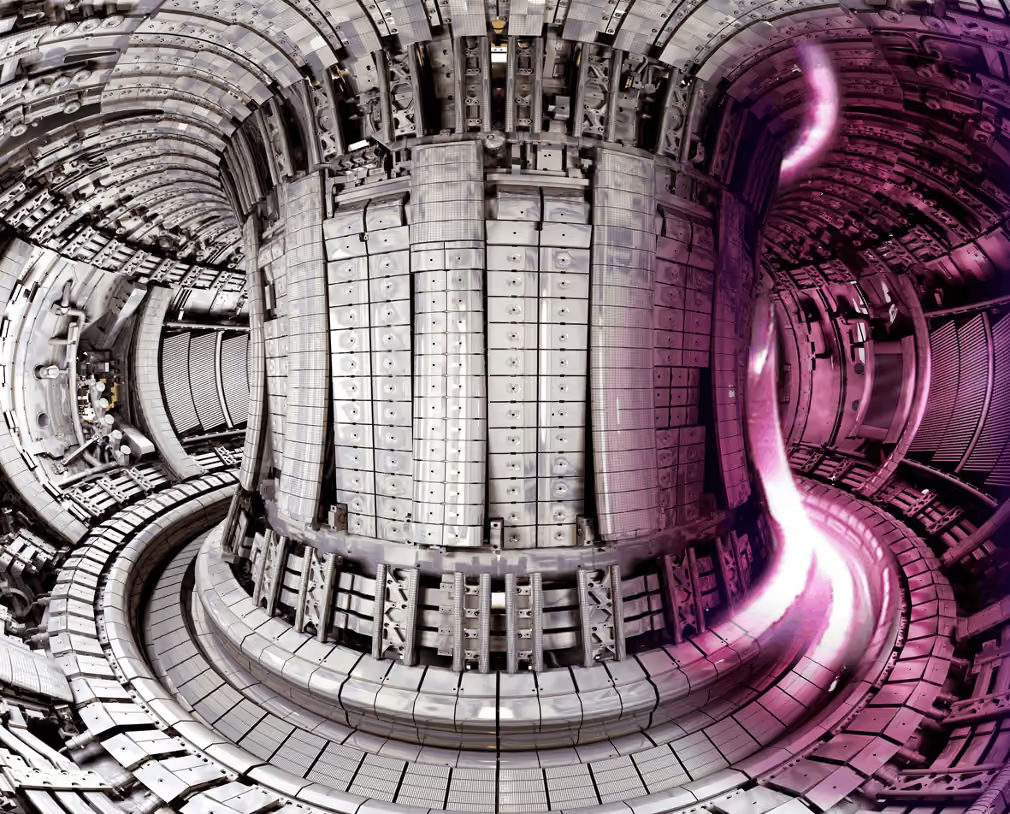
Tungsten’s high melting temperature, thermal conductivity and elevated temperature mechanical properties have made it one of the most promising candidates as a plasma-facing material in nuclear fusion reactors. Electron-beam powder-bed fusion has emerged as an effective means of manufacturing tungsten in complex geometries, but work remains to further optimise the process so it can be utilised in future tokomak reactors.
Tungsten Development
For electron beam powder bed fusion tungsten, process conditions can closely influence the material’s mechanical strength and susceptibility to defects. Samples manufactured using a Freemelt ONE were processed using hot isostatic pressing (HIP) at temperatures between 1400-1800°C, successfully closing cracks formed during printing.
Despite this, tungsten is brittle and electron discharge machining can induce additional surface flaws, making it extremely difficult to generate tensile data conventionally. Profilometry-based Indentation Plastometry (PIP testing) was used as a rapid alternative to assess the effect of HIP temperature on high temperature mechanical properties.
High-Temperature PIP Testing
Samples
Three 1 cm³ tungsten cubes manufactured using a Freemelt ONE.
Measurements
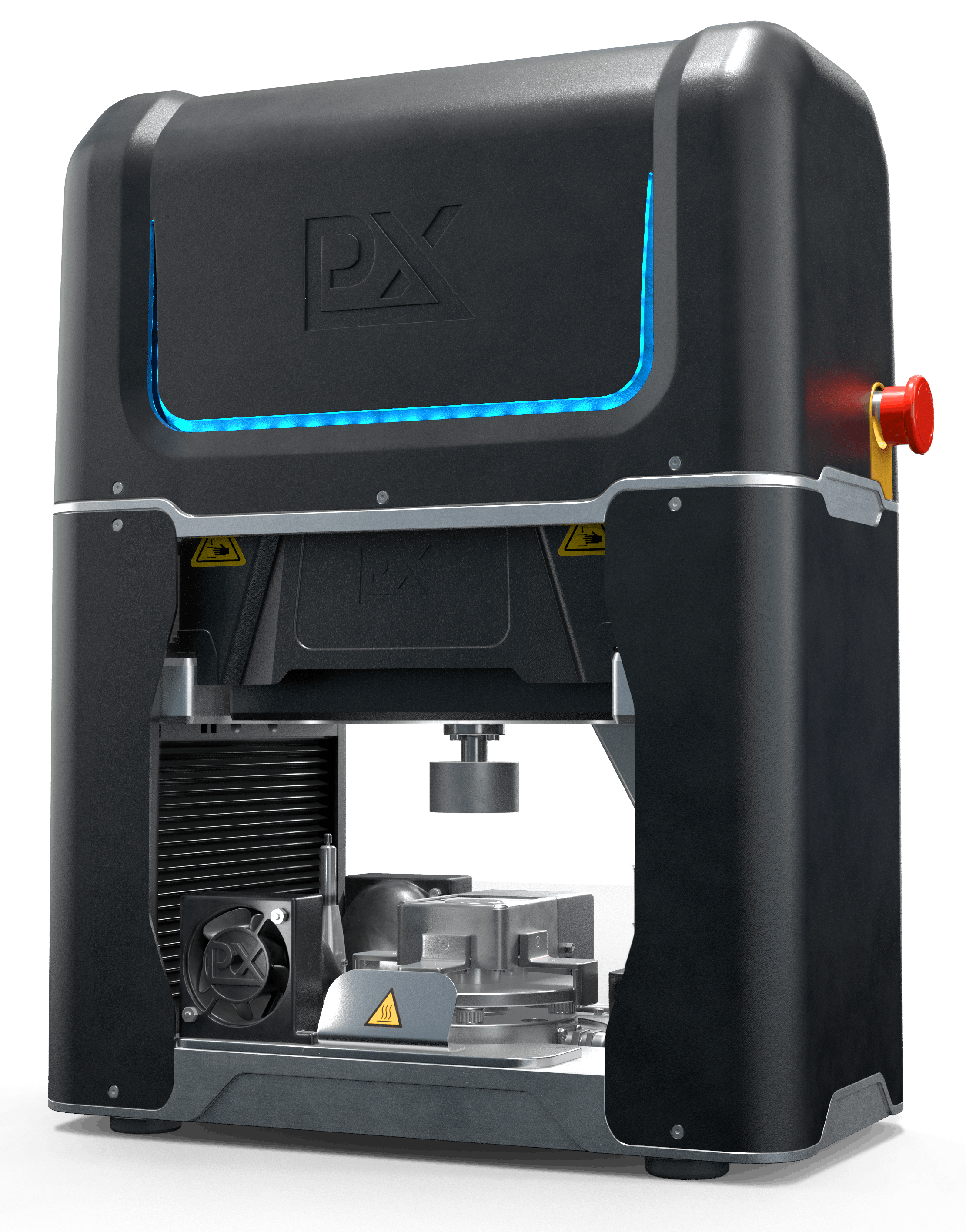
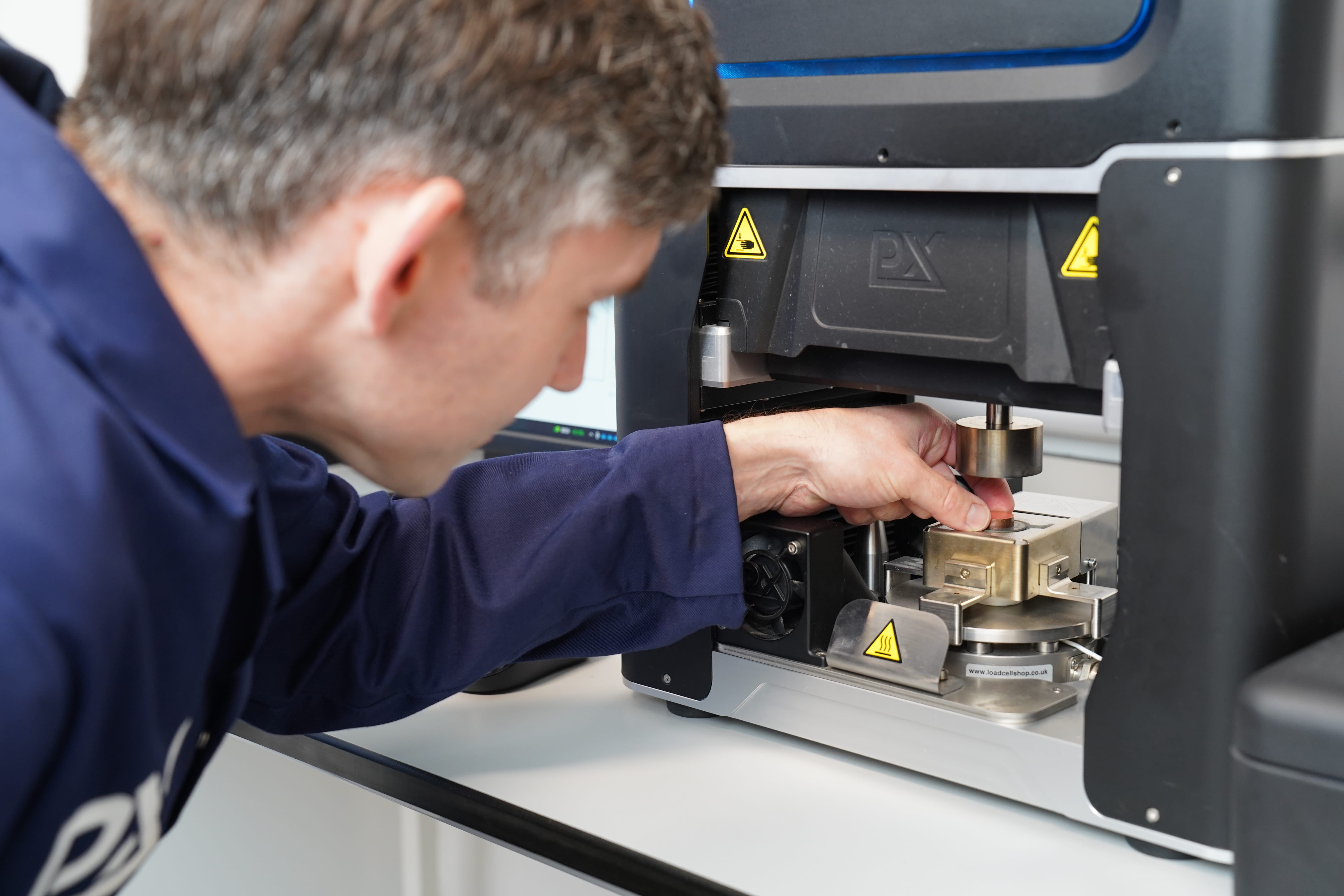
Mechanical properties were measured using the PLX-HotStage, a compact indentation-based device that enables testing up to 800°C.
Method
Using PIP testing, Plastometrex tested each cube in less than 30 minutes each, rapidly speeding up material characterisation.
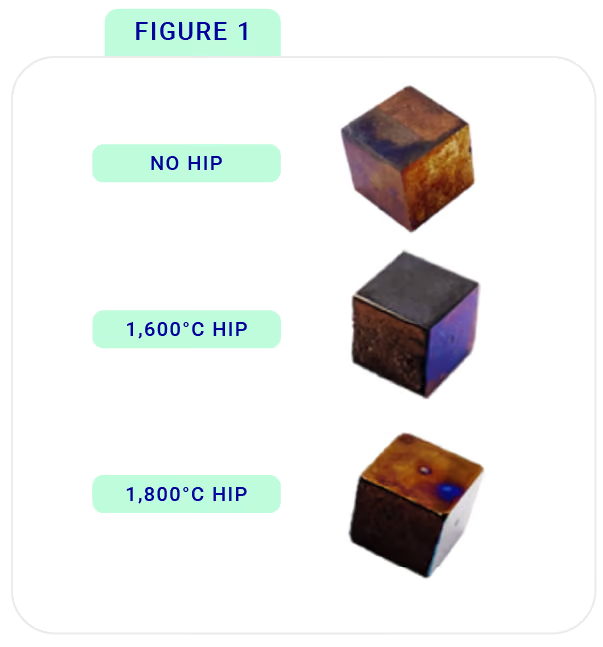
Figure 1: Three tungsten samples tested using no Hot isostatic pressing (HIP), 1600°C HIP, and 1800°C HIP.
Results
Minimal differences were observed in the PIP-derived yield stress between samples with no HIP treatment and a 1600°C HIP treatment. A 58% reduction in yield stress was observed for the 1800°C HIP sample, which was found to correlate with a significant grain coarsening at this HIP temperature.
The PIP-derived yield stress agreed within 2 MPa of a comparative high temperature tensile test of the same material but required a fraction of the material volume and minimal sample preparation.

PIP generated highly accurate stress-strain
results at 550°C on a challenging material.

Significant grain coarsening at 1800°C aligned
closely with a 58% reduction in yield stress.
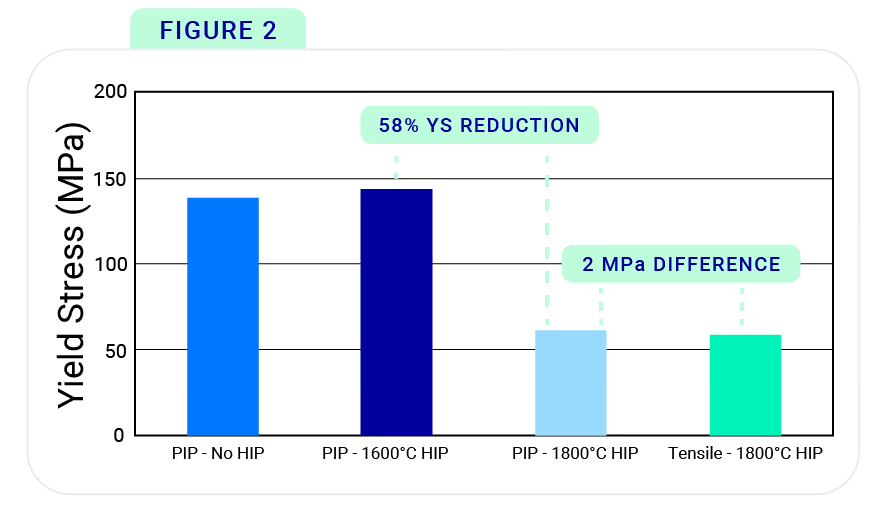
Figure 1: three tungsten samples tested using no Hot isostatic pressing (HIP), 1600°C HIP, and 1800°C HIP.

Conclusion
PIP testing enabled rapid, high-temperature characterisation of additively manufactured tungsten. It clearly resolved the impact of HIP temperature on mechanical performance, supporting faster optimisation of fusion-ready materials and accelerating progress towards nuclear fusion deployment.