PLX-PORTABLE
Instant & Reliable In-situ Mechanical Data for Structural Steels
Gather yield and tensile strength from structural steel columns and beams in the field, non-destructively. Data is ready instantly and feeds directly into design calculations, giving engineering teams defensible input for retrofit and reuse projects, without waiting for cut-outs and lab analysis.


Powering testing at NASA, Airbus, and more


.png)







Eliminate uncertainty with immediate & defensible in-situ strength data
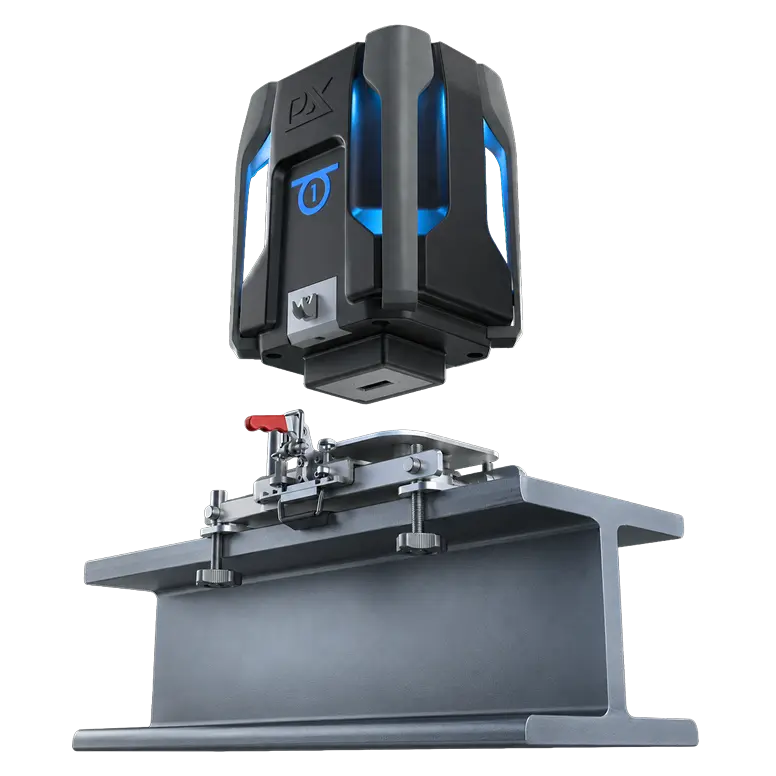
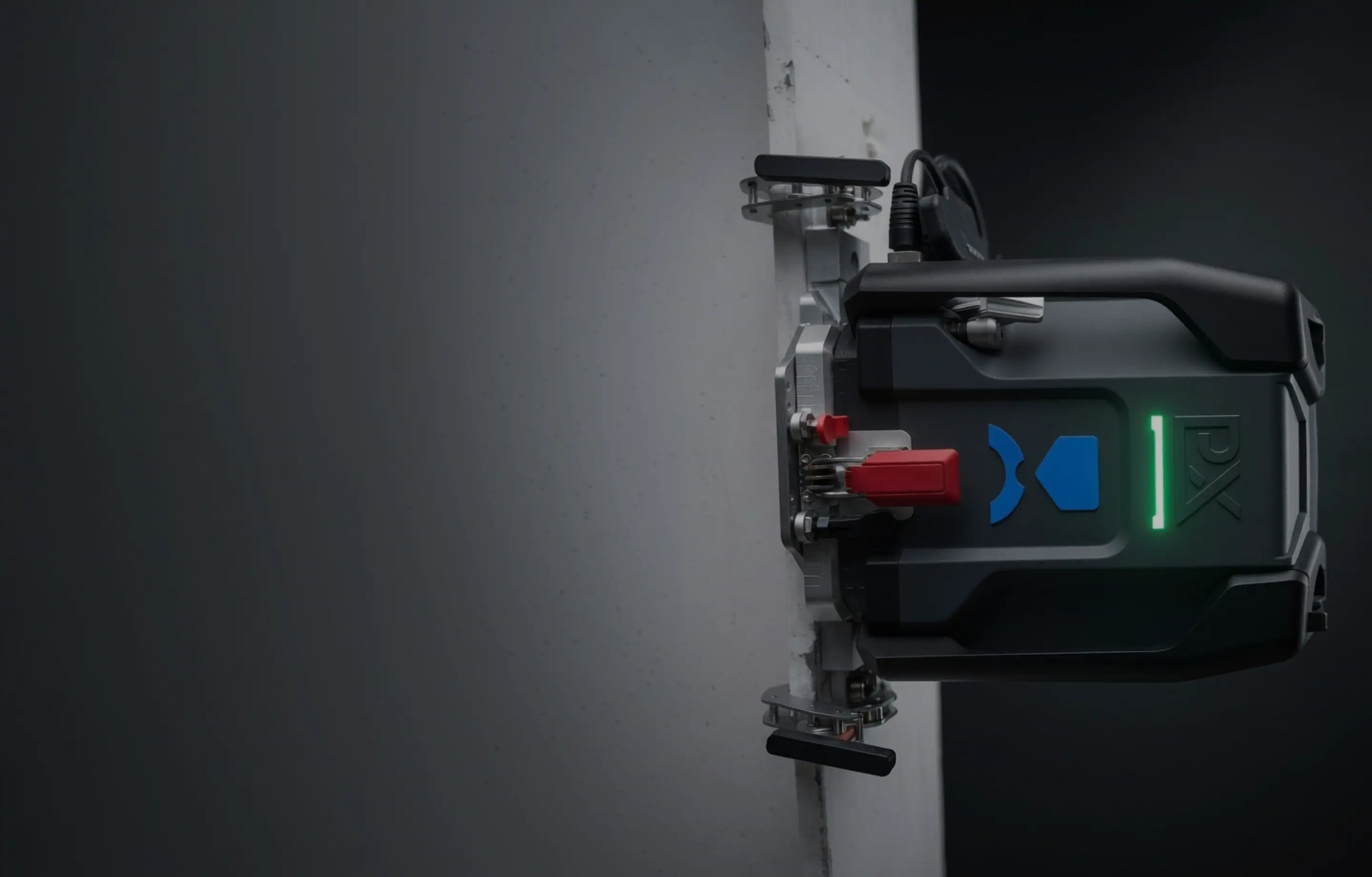
The PLX-Portable brings PIP testing into the field and onto your structure. It’s a two-module solution designed to attach to I-beams and columns to quickly and reliably report yield and tensile strength. Where tensile testing requires cutting samples and hardness testing leaves you with proxies and large safety margins, PIP delivers stress-strain results in minutes, giving structural engineers reliable data for engineering decisions.

Non-destructive testing
Rapidly test directly on structures without the need for coupons or lab analysis.

Yield and tensile strength
Obtain tensile-equivalent data up to UTS in-situ from structural steel beams and columns.

Results available immediately
Gather final data instantly. No delays, no further steps necessary.
What our customers say


Dr Robert Deffley
Principal Engineer


Brent T Maples
Senior NDE Specialist

%20(1).webp)
Dr Rob Thompson
Teaching Associate


David Wragg
Senior Metallic Materials Engineer

Lewis Corbett
Design Engineer

.png)

Behrang Poorganji
VP of Materials Technology



Case Study: Too often, assessing structural steel is a compromise
In this case study with WSP, we demonstrated how a 10% difference in hardness can mask a 57% difference in yield strength.
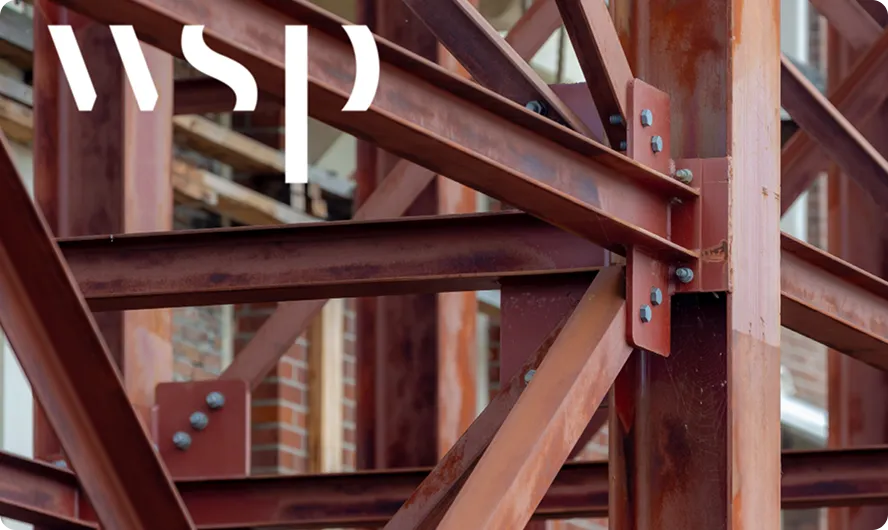
Our partner, WSP required an in-situ, non-destructive test solution with the yield- and tensile-strength accuracy of tensile testing.
Tensile Testing
Tensile remains the ‘gold standard’ for accuracy, but cutting a coupon and waiting for lab analysis is time-consuming and often impractical. That can risk your project schedule by adding weeks, or even months.
Hardness Testing
A 10% difference in hardness can mask a 57% difference in yield strength. In practice, that means hardness readings can put structural steel into the wrong grade, either overstating capacity or forcing conservative design decisions the material didn't need.
Core components
Indenter Module
This module houses and controls the indenter head, recording both the applied load and measured displacement. It creates up to 5 evenly spaced indents across a column’s surface, enabling users to gather comprehensive material data.

Optical Profilometer Module
Using red-light interferometry, this module captures the full 3D profile of each indent at high resolution. That shape data becomes the input for the inverse finite element analysis that extracts yield strength, ultimate tensile strength, and full stress-strain behaviour.

Rugged PC & Software
The rugged PC comes pre-loaded with our Portable Testing Wizard (PTW) software, guiding you through each step of the test. From surface preparation to results, the interface delivers consistent, defensible data on every measurement, whatever the site conditions.

A guided process, from start to finish
The PLX-Portable delivers stress-strain results in the field through a five-step guided process. Our Portable Testing Wizard (PTW) software walks operators through each step with built-in checks and prompts, giving structural engineers data they can rely on for design decisions.
Prepare Surface
Rapidly prepare the test surface using off-the-shelf tools.
Attach Cradle
Using our bespoke mounting system, attach the cradle to the structure.
Make Indents
Connect the indenter module, make up-to five indents at a time.
Scan Indents
Swap in the profilometer module, which scans the indent profile.
Instant Data Analysis
Our software then analyses the profile shape and gives a stress-strain curve and real-time strength data.
Frequently asked questions
What structural steel grades can PIP verify?
PIP has been validated across common structural steel grades including S235, S275, S355, and higher-strength variants, plus historical grades in ageing buildings. Where mill certificates are missing or ambiguous, PIP delivers yield and tensile strength directly from the column or beam itself.
How does PIP compare to portable hardness testing for structural steel?
Portable hardness testing returns a surface hardness reading tied to empirical correlations. PIP measures the material's response to indentation and extracts full stress-strain data, giving structural engineers values they can defend in design calculations.
Is PIP data suitable for structural design calculations?
Yes. PIP returns yield strength, UTS, and stress-strain curves, which are the properties structural engineers design against. The method is formalised in ASTM E3499-25, and PIP-derived values have been benchmarked against tensile testing to within 3-4%.
Can PIP be used on painted or coated structural steel members?
Yes. PIP requires only a small, locally flat surface for the indent. Paint, primer, or protective coatings can be removed from a small area using standard off-the-shelf abrasive tools in a few minutes. The rest of the beam or column stays untouched.
Does PIP require members to be taken out of service?
No. PIP is non-destructive and can be performed directly on structural members while they carry load. The test leaves a single small indent behind, with no shoring, cutting, or interruption to the member's structural function.
How long does a PIP test take on site?
A single PIP test using the PLX-Portable takes less than 10 minutes after surface preparation, and up to five tests can be performed in sequence. Data is available on site immediately, ready to feed straight into design calculations.
Does PIP testing with the PLX-Portable use a recognised standard test method?
Yes. PIP is formalised in ASTM E3499-25 as a standard method for extracting stress-strain data from indentation measurements. It has been the subject of an Innovate UK-funded project with WSP and Sandberg to develop portable PIP testing for structural steel verification, backed by DESNZ and Defra.
Bring non-destructive testing to your building site
Talk to our team about your testing requirements. We'll walk through how the PLX-Portable fits your steel re-use or building retrofit goals.