Automated Materials Testing Across Every Sample
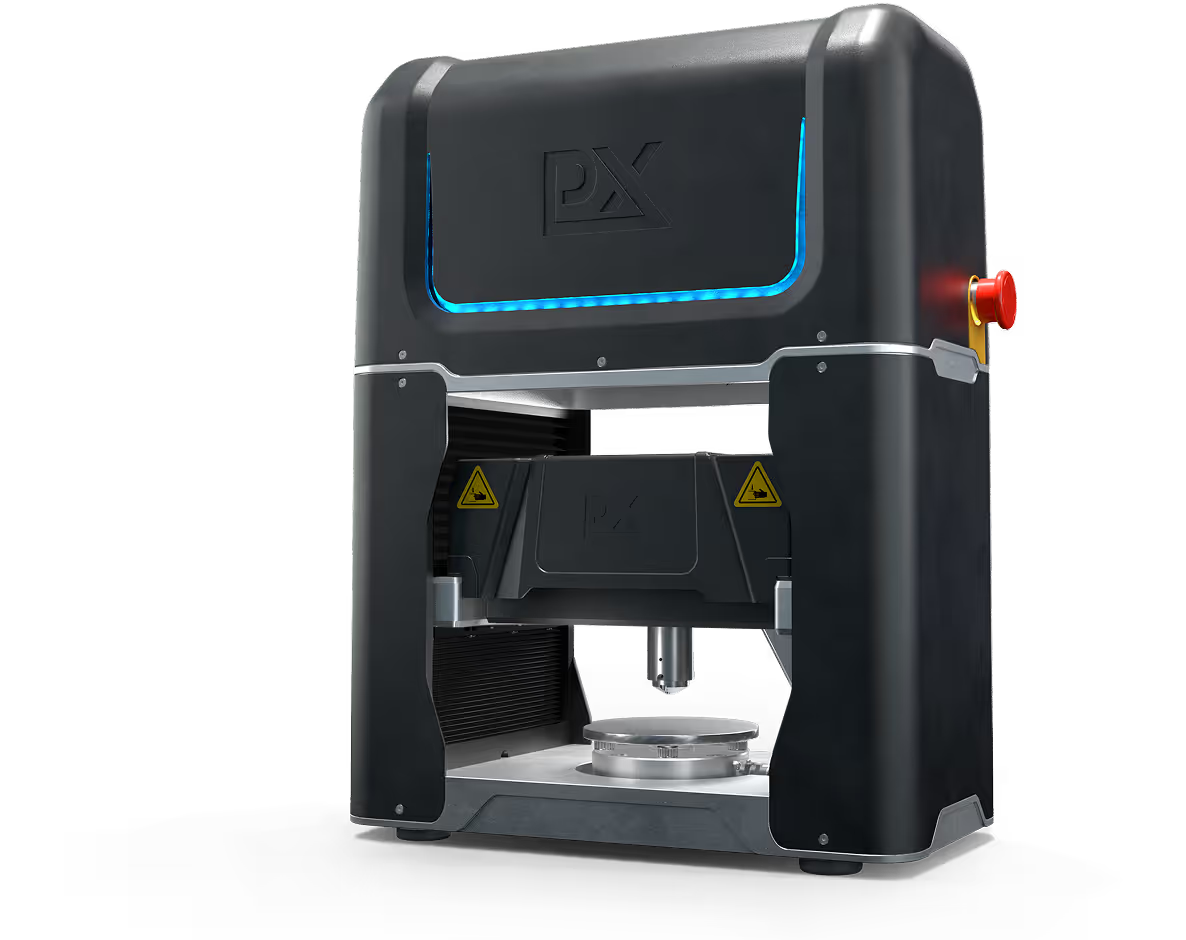
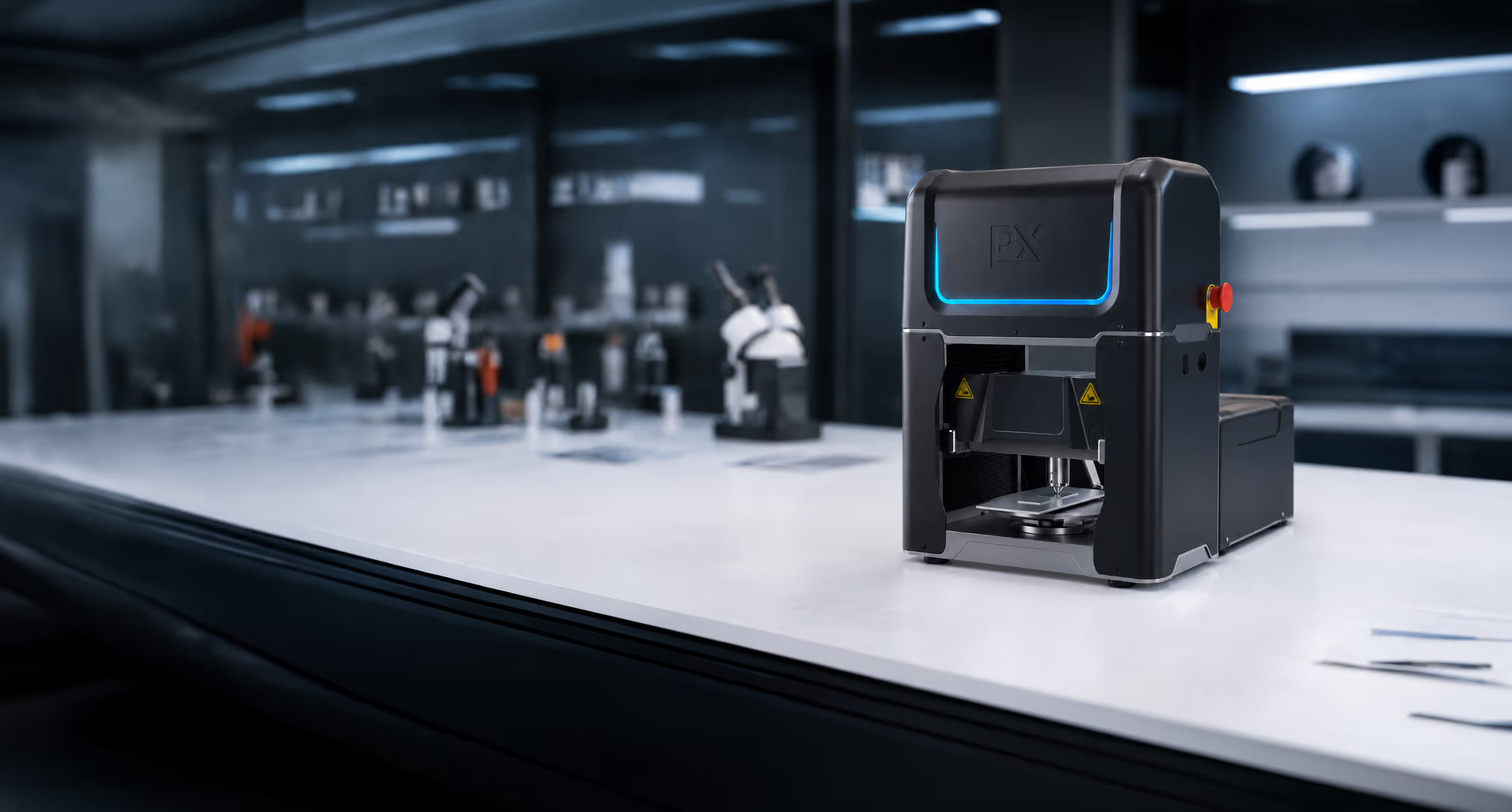
When engineers have to qualify a full batch of samples or map a part’s mechanical properties, they rely on the PLX-AutoStage. This modular addition to the PLX-Benchtop enables users to confidently collect data from precisely the right location on each sample, supporting reliable, repeatable material insights.



Powering testing at NASA, Airbus, and more


.png)








Reduce testing bottlenecks with automated materials testing
When integrated with the PLX-Benchtop, the PLX-AutoStage lets users map a weld, qualify a full batch of samples, or screen an alloy matrix from one simple test programme without manual interference. Advanced software-led indent placement enables users to select exactly where on each sample a test should be performed, ensuring consistent stress-strain data and allowing users to uncover new material insights that traditional testing methods may miss.

Unmanned testing workflows
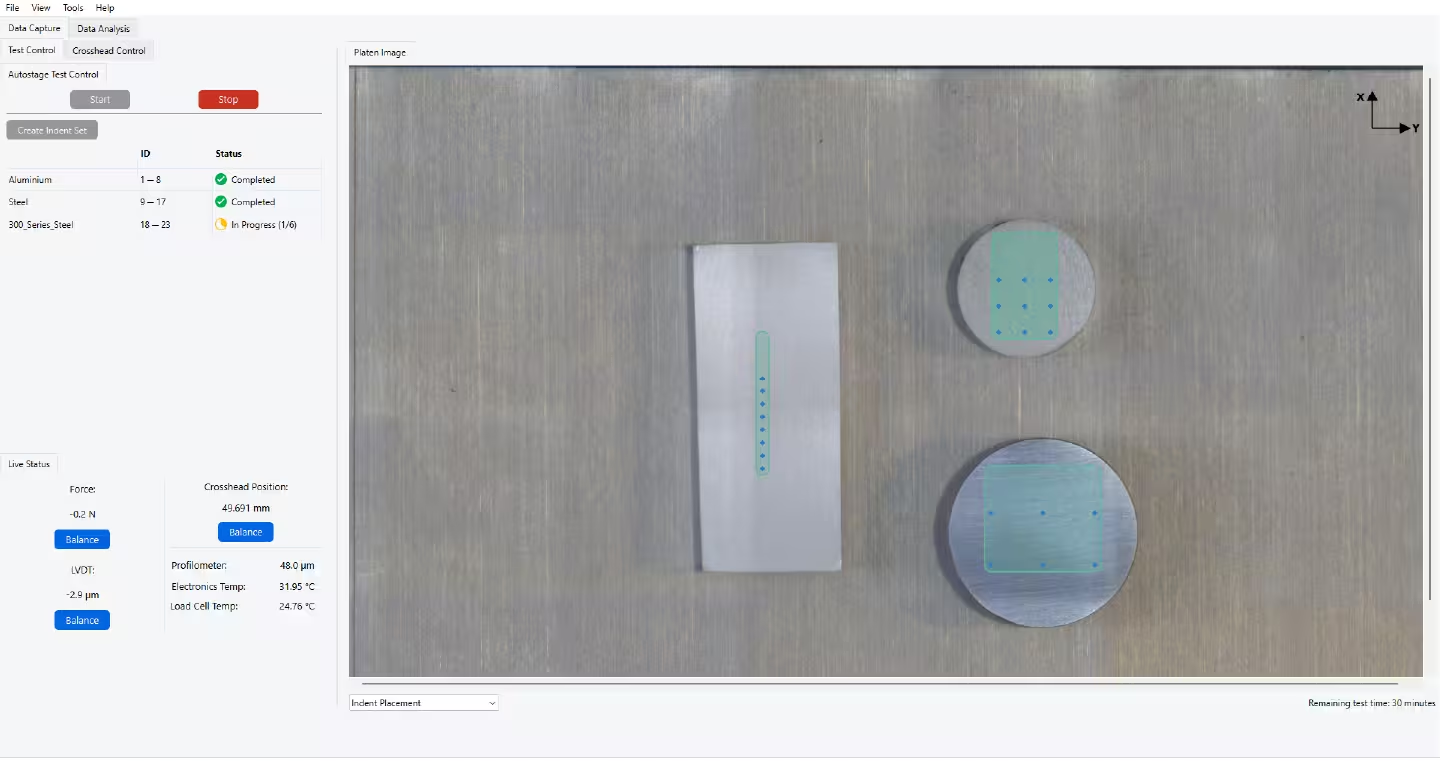
Load your samples, select the indent locations, and walk away. The PLX-AutoStage moves between samples automatically and runs a full test programme with no engineer intervention required.

High resolution mapping
Program indent spacing as close as 1.5 mm apart across single components to gather fine-scale mechanical property data across welds or complex parts.

Confident data collection
Precise software-led positioning places every indent exactly where you intended it, ensuring full stress-strain curves with none of the conversions or proxies hardness measurements rely on.
Map mechanical behaviour across welds and complex parts
The PLX-AutoStage enables automated mechanical property mapping at high spatial resolution, uncovering the variations across weld regions, heat-affected zones, and complex part geometries that conventional testing cannot see.
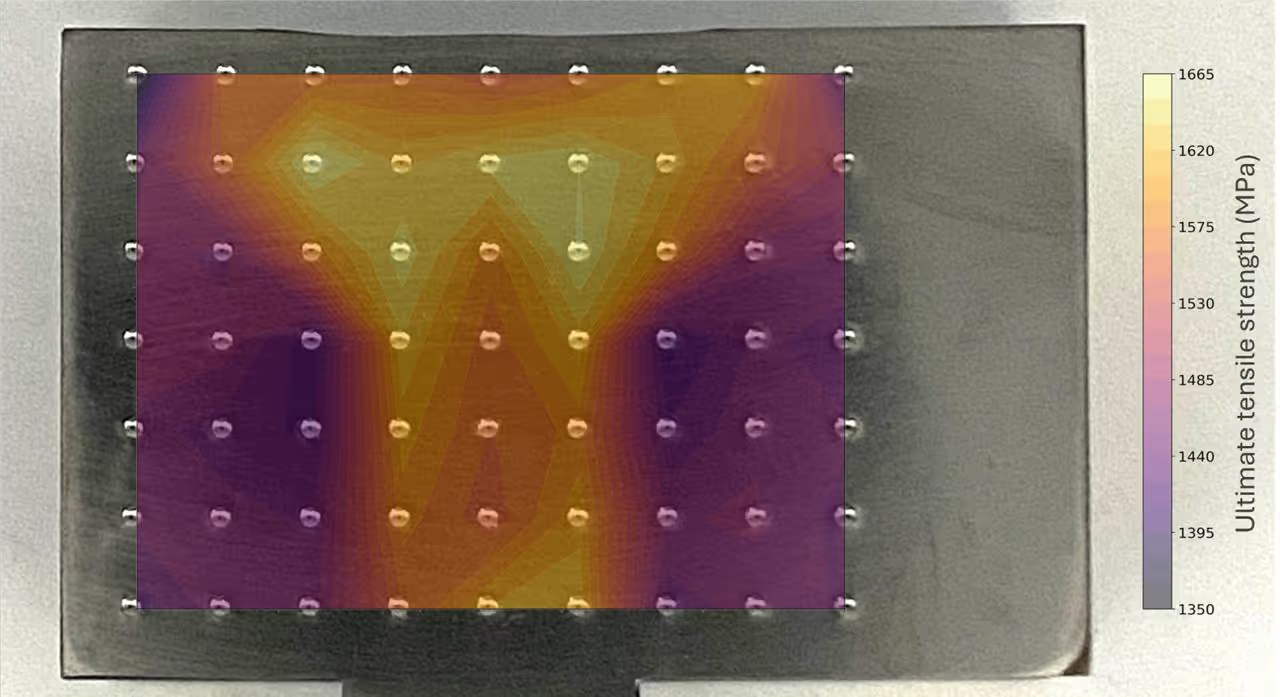
A titanium weld was indented on a 7 × 9 grid, with the PLX-AutoStage extracting a stress-strain curve from each of the 63 indents to map mechanical behaviour across the weld region and the surrounding heat-affected zones.
This was achieved at the click of a button: each indent location was pre-selected in the software before the automated testing process was activated, eliminating intervention between tests and leaving the engineer free to focus on data analysis and optimisation.
How automated indentation testing works with the PLX-AutoStage
The PLX-AutoStage is powered by PIP Testing (Profilometry-based Indentation Plastometry), a method developed by Plastometrex and internationally recognised by ASTM standard E3499-25. PIP Testing is non-destructive, measuring stress-strain response via a small indentation and finite element analysis.
Load Sample(s)
Place a single or multiple samples on the AutoStage tray.

Set indent locations
Define the indent positions and spacing for each sample down to 1.5 mm apart in the PLX software. Set the test programme once, and the PLX-AutoStage automatically run each test in sequence.
PIP test
An indent is then created at each specified location, with the integrated profilometer capturing the 3D shape of the residual indent profile.

Instant results
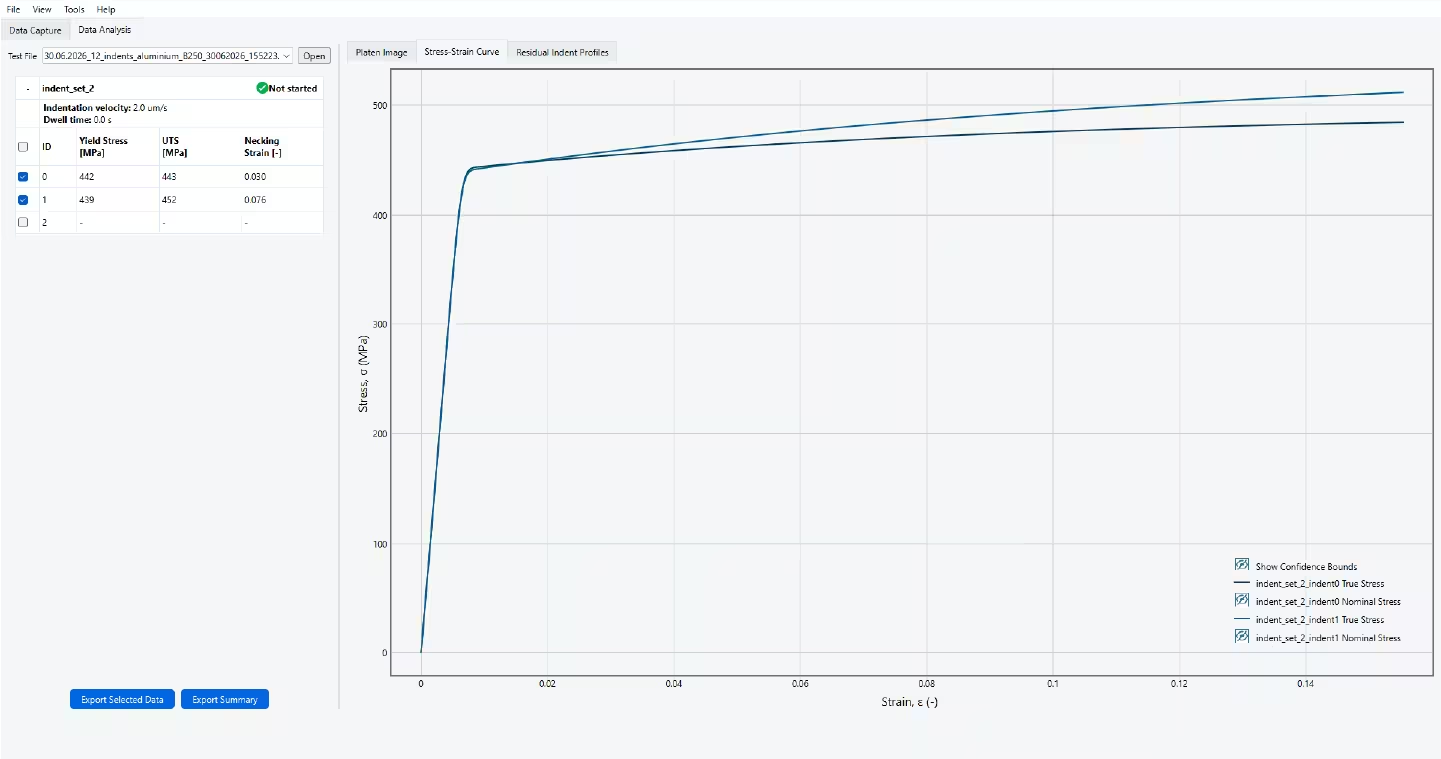
An accelerated inverse finite element model determines the key mechanical properties including yield strength and ultimate tensile strength (UTS).

See what our customers say

Dr Calvin Stewart



Dr Robert Deffley
Principal Engineer


Jed Robinson-Wall
Materials Scientist at Renishaw


Behrang Poorganji
VP of Materials Technology at Nikon AM Synergy


Prof. Roger Reed FREng FIMMM
Professor of Materials and Solid Mechanics at Oxford University


Tony Fry
Principal Scientist at National Physics Laboratory


Mark Jackson
Research & Innovation at Leonardo Helicopters UK


Ian Brooks
Technical Director at Additure


Benjamin Haigh
Materials Scientist at Renishaw

Kazuhiro Mizuta
Managing Director at Aeroedge

.png)
Dr Calvin Stewart
Innovation Scholar & Associate Professor at Ohio State University


Uncover new mechanical property insights

How NASA revealed hidden property variations with PIP testing
In collaboration with NASA, Plastometrex used PIP Testing to map mechanical property variation across an additively manufactured part. PIP surfaced spatial variation that neither hardness nor tensile testing could resolve, giving NASA the data to inform safer, lighter spaceflight component designs.
15%
as wall thickness decreased from 50 mm to 10 mm, while UTS remained largely constant. PIP captured data that a single tensile test would have averaged out.
2.6% and 0.4%
with NASA’s independent tensile testing data, confirming the accuracy of PIP testing.
PIP gave NASA the data to link local performance directly to build conditions and part geometry, informing print parameters and tailored designs that maintain structural integrity without adding weight.
How do the results compare with tensile testing?
Use this interactive tool to discover the level of agreement between PIP testing and tensile testing results.
Choose device, base metal, alloy, or processing method
Explore comparison data between PIP and tensile
Discuss your materials with our Application Engineers

Bring high-throughput PIP testing to your lab
Talk to our applications engineering team about your testing requirements. We'll walk through how the PLX-AutoStage fits your materials and workflows and help identify the right configuration for your testing needs.