Hardness testing was built to answer one modest question: how well does a surface resist a dent? For a century that was enough, fast batch checks and quality control on thick, uniform metal. The trouble is that engineers now lean on it for something it was never designed to do, inferring bulk strength and judging whether a material can be trusted in service.
Since the invention of hardness testing in the early 20th century, the methodology has been widely employed as a fast, practical means of comparing material properties in conjunction with other common methods such as tensile or compression testing. Historically, hardness tests answered one simple question: how resistant is a surface to permanent indentation? The answer to this question proved useful for fast quality checks, batch-to-batch comparison, and quality control on thick, uniform materials. The goal in these scenarios was efficiency and repeatability, not full mechanical characterisation.
However, the role of hardness testing in modern research and development (R&D) has changed dramatically. Now, hardness is just as often used to infer bulk strength values, compare mechanical behaviour across different regions of a complex part, or otherwise act as a stand-in for missing mechanical data. As a result, hardness testing has moved from a screening tool (“did this batch change as expected after heat treatment?”) to a decision-making input (“Can we trust this material in service?”).
This seismic shift in the role of hardness testing didn’t occur because the known limits of the methodology suddenly disappeared. Those limits have been well understood for decades. Instead, hardness took on a more central role because other, more reliable mechanical tests could not be applied to the kinds of components engineers increasingly needed to evaluate. As parts became thinner, smaller, and more geometrically complex, tensile testing needed increasingly complex test frames, became more difficult to perform and interpret data output, or was simply impossible to carry out entirely. In many cases, hardness was not chosen because it was the best option, but because the only other option was not to test at all.
The Challenge with Hardness Testing
Thin sections, welds, and complex parts often sit outside the practical reach of conventional testing. Tensile testing, while the current ‘gold standard’ for gathering material property data, has a number of limitations, including the need for carefully prepared specimens that will then be destroyed through testing. For extremely thin samples, complex geometries, or small material volumes, these limitations can hinder the application of the method. Further, each tensile test can only provide the average response from a relatively large volume, meaning it cannot readily be used to map material properties across welds or between sections of an intricate part.
Because of this, engineers are forced to either accept working with the flawed data provided by hardness testing or progressing with no data at all. When the choice is between “bad” or “worse”, it’s no wonder that hardness testing has become so widely used.
Hardness testing can indicate certain material properties, including a metal’s relative resistance to indentation, changes due to processing or heat treatment, or differences between regions at a very local scale. However, the method does not measure stress-strain response, including yielding and work hardening behaviours: key material property insights that are widely used to inform engineering decisions. With hardness testing, any link to strength relies entirely on empirical correlations which are not universal. These correlations are dependent on factors such as the load used during testing, material, microstructure, and processing history. Further, hardness testing, especially microhardness, demands a highly polished surface to reliably collect indent data: a requirement which substantially increases the time needed for sample preparation. Outside of extremely controlled conditions, these unknown variables can leave engineers with more questions than answers.
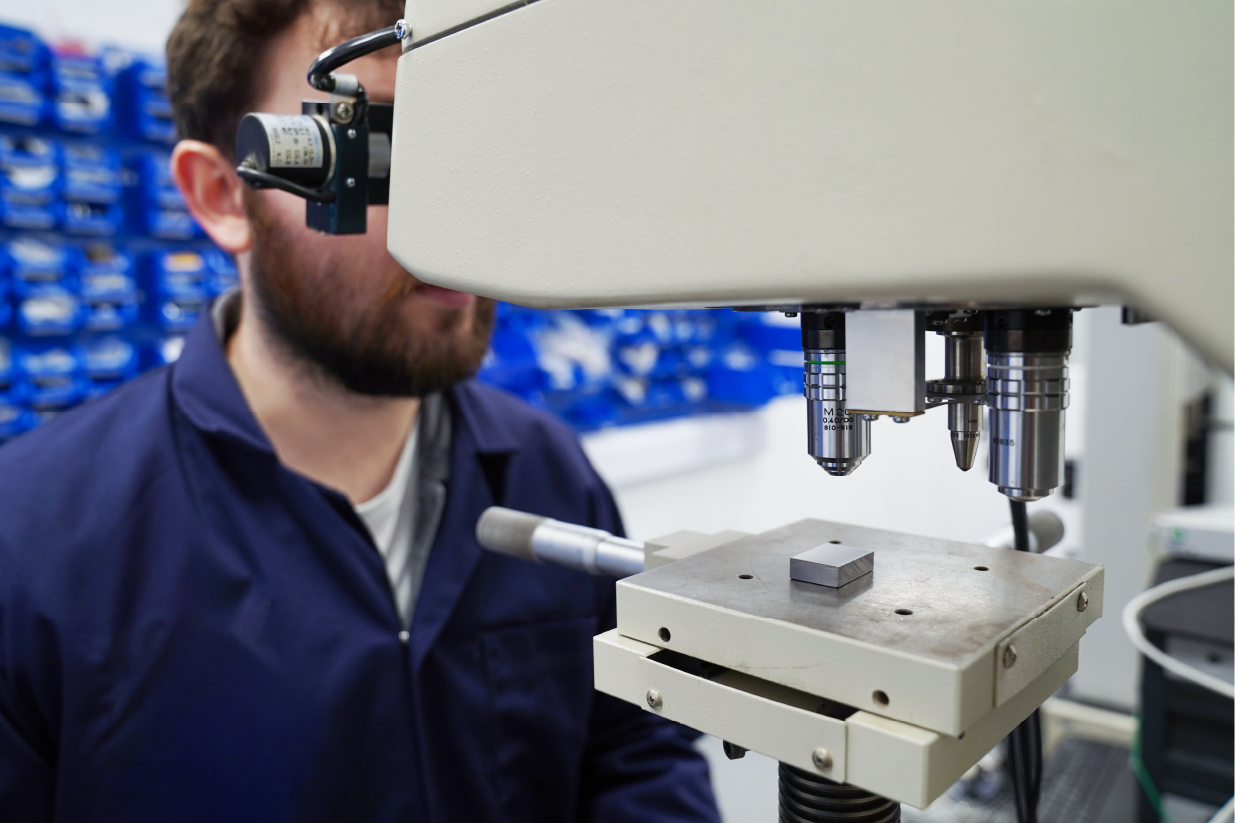
When using hardness to map material properties across a weld, joint, or complex shape, engineers must consider more than testing resolution. While hardness maps can return large volumes of data at a high spatial resolution, important aspects of performance remain hidden. Microstructure can change over extremely short distances, while heat input and processing history vary locally, all of which can impact material performance. Two test regions in a hardness map may return similar hardness numbers while exhibiting very different mechanical behaviour, particularly in how they yield and harden under load. In these cases, hardness provides a sense of consistency that does not always reflect how the material will actually act in service.
The ambiguous data provided by hardness testing can directly shape engineering assumptions that play a key part in decision making. The results of these tests can influence safety margins, qualification strategies, and understanding of part performance. Over time, this can lead to misplaced confidence or unnecessary conservatism.
A More Direct Approach
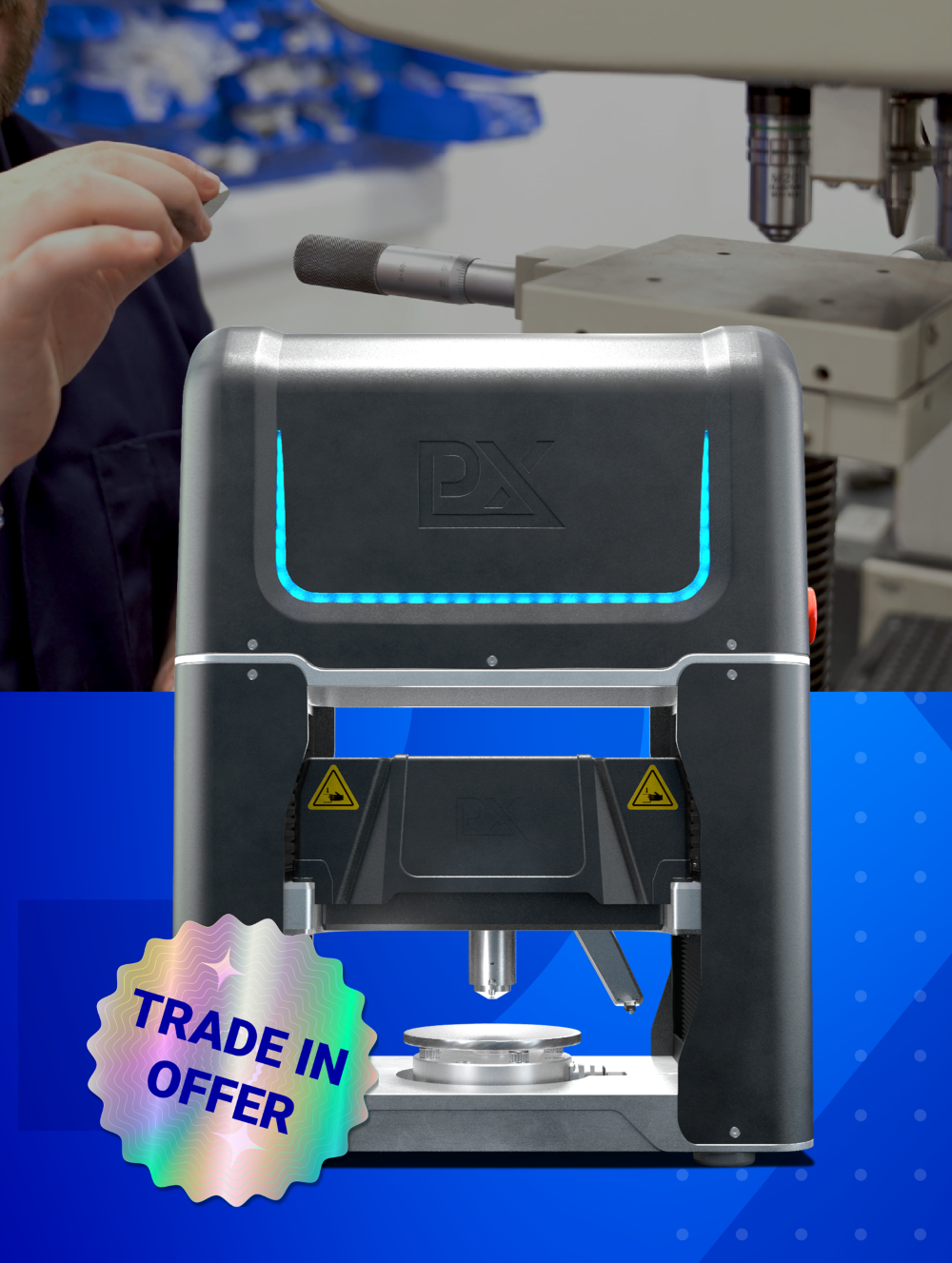
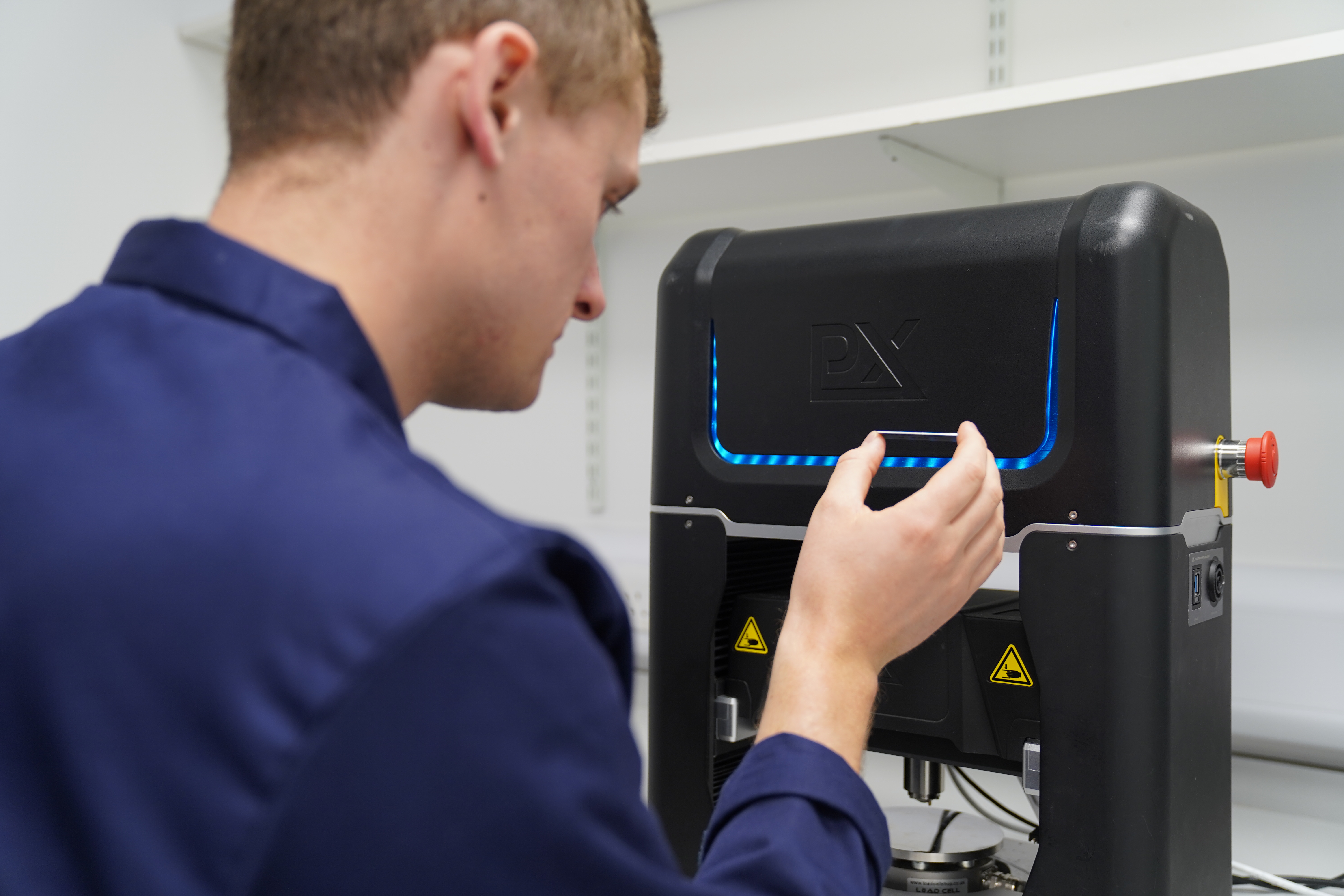
Until recently, engineers wishing to gather material property data on small, thin or complex parts haven’t had a more practical option than hardness testing. PIP (Profilometry-based Indentation Plastometry) testing was developed to address this gap.
This ASTM-standardised test method extracts stress-strain behaviour directly from indentation data using physics-based modelling, eliminating the need to rely on proxy measurements and empirical relationships. This removes the need to infer mechanical behaviour from a single hardness value.
PIP makes it possible to non-destructively test samples as thin as 0.75 mm. Indents can be spaced as close as 1.5 mm apart, enabling high-resolution mapping across welds and joints. Each PIP test provides yield stress and ultimate tensile strength (UTS) data that cannot be provided by hardness without the use of empirical correlations that are at the mercy of variable testing conditions and are only narrowly applicable. Further, with PIP testing users are able to quickly and easily probe the local mechanical behaviour of samples where tensile testing is difficult or impossible. This changes the basis on which mechanical decisions are made. Using the data provided by PIP, the focus shifts from interpreting indirect signals to working with mechanical behaviour itself.
Conclusion
Hardness testing has endured because it was often the only practical option available, not because it offered the data engineers actually required for well-informed decisions. When faced with thin sections, welds, or complex geometries, it became a substitute for missing mechanical insight. As access to direct mechanical data improves, the role of hardness testing in thin and complex components becomes harder to justify.
PIP testing provides direct access to stress–strain behaviour, replacing proxy measurements with mechanical data that can be used with confidence. The need to rely on assumptions and correlations is reduced, and decisions can be grounded in measured behaviour rather than inference. For thin and complex components, direct measurement of mechanical behaviour offers a stronger and more defensible basis for decision-making than hardness ever could.
Learn more about PIP testing by clicking here.
Frequently Asked Questions
Why has hardness testing become so widely used in R&D?
Not because it's the best option, but because more reliable tests often couldn't be applied to the parts engineers needed to evaluate. As components became thinner, smaller, and more complex, tensile testing grew difficult or impossible, so hardness was frequently used because the only other choice was not to test at all.
What can't hardness testing measure?
Hardness testing does not measure stress-strain response, including yielding and work-hardening behaviour, which are key inputs for engineering decisions. Any link to strength relies on empirical correlations that aren't universal, since they depend on the test load, material, microstructure, and processing history.
Why is hardness mapping across welds and complex parts unreliable?
Two regions in a hardness map can return similar hardness numbers while behaving very differently under load, particularly in how they yield and harden. Microstructure, heat input, and processing history vary over very short distances, so hardness can suggest a consistency that doesn't reflect how the material actually performs in service.
How is PIP testing different from hardness testing?
PIP (Profilometry-based Indentation Plastometry) is an ASTM-standardised method that extracts stress-strain behaviour directly from indentation data using physics-based modelling. This removes the need to infer mechanical behaviour from a single hardness value or rely on empirical correlations, giving yield stress and UTS data directly.
What samples can PIP testing handle?
PIP can non-destructively test samples as thin as 0.75 mm, with indents spaced as close as 1.5 mm apart for high-resolution mapping across welds and joints. It lets engineers probe local mechanical behaviour with minimal sample preparation, including on thin sections and complex components where tensile testing is difficult or impossible.

Jimmy co-founded Plastometrex aftercompleting his PhD at the University of Cambridge under Professor Bill Clyneand Dr James Dean. His doctoral research focused on experimental methods andcomputer models for extracting mechanical properties from indentation data, andidentified a fundamental flaw in an analytical calculation method used widelyin the indentation community, demonstrating that problems of that nature couldonly be tackled with advanced numerical modelling. He has published more thanseven peer-reviewed papers on the subject and presented his work at multipleinternational conferences.