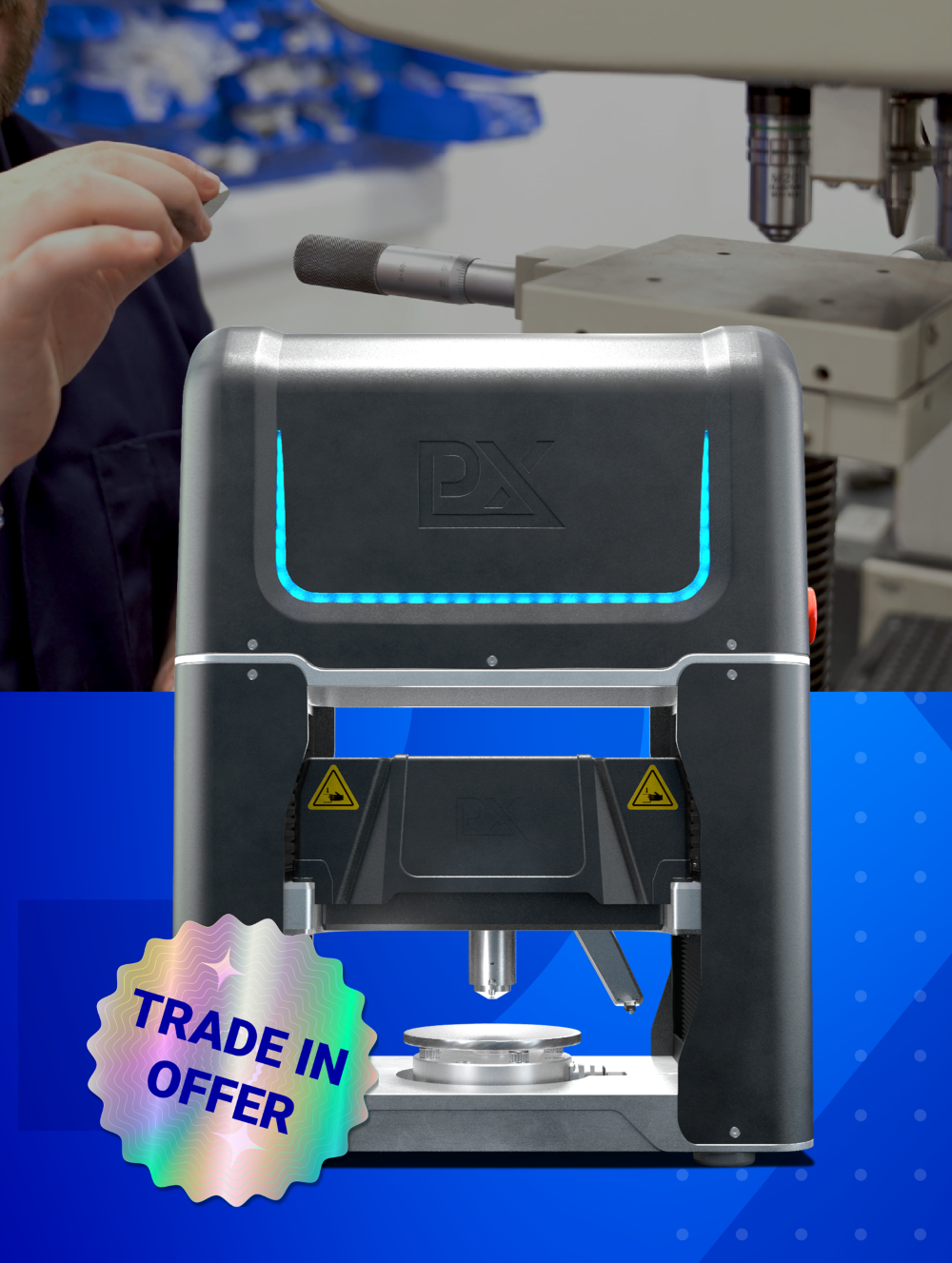
After more than a decade of research, validation, and collaboration, PIP Testing (Profilometry-based Indentation Plastometry) now has its own ASTM standard: ASTM E3499-25. The milestone is as much a story about the community that believed in the method as it is about the science, reflecting years of effort from the scientists, engineers, and customers who helped prove it could be trusted.
PIP Testing (Profilometry-based Indentation Plastometry) now has its own ASTM standard: ASTM E3499-25. The publication of this standard marks the culmination of more than a decade of research, validation and collaboration between scientists, engineers and our global network of customers. This milestone reflects years of effort from a community that believed in the method and helped prove its reliability.
PIP Testing was developed to address a common challenge in mechanical testing: how to obtain reliable stress–strain data when conventional tensile testing is slow, impractical, or not possible. Engineers working with small samples, complex geometries, welded structures or in-service components often face limitations with coupon-based methods that require large volumes of material and destructive specimen preparation.
By extracting tensile-equivalent mechanical properties from a small surface indentation, PIP enables materials to be characterised directly on real components, using minimal material and with rapid turnaround. Since its commercial launch in 2021, the method has been adopted across research and industrial settings where faster, more flexible access to mechanical property data is needed without compromising reliability.
The Roots of Indentation Plastometry
The long road to PIP Testing and standardisation began in the early 2000’s, when research into indentation-based test methods was being conducted in the group of Professor Bill Clyne at the University of Cambridge’s Gordon Laboratory. Focussing initially on nano-indentation test methods, the group conducted studies on creep and super-elastic behaviour in metallic materials. Dr James Dean (later to become Plastometrex CEO) followed soon after as the group began early-stage development of approaches to overcoming the problem of extracting full stress-strain curves from bulk metals and thin coatings.
In 2014, Dr Jimmy Campbell (now Plastometrex CTO) joined the research team, where he collaborated with Professor Clyne and Dr Dean as the team continued to lay the foundations for what would ultimately become the PIP Test method.
In 2019, the term indentation plastometry was introduced in a paper authored by Professor Clyne, Dr Campbell, and Dr Dean, comparing results from the method with those from conventional tensile testing. That same year saw the founding of Plastometrex, marking the transition from academic research to commercial technology development. Between then and commercial launch, the team at Plastometrex continued development towards a method which would exhibit commercial-grade accuracy levels, leading eventually to PIP Testing.
The first prototype employing PIP Testing was developed in 2019, with validation testing carried out alongside Element Materials Technology. The results showed strong agreement between PIP tests and conventional tensile tests, leading Element to become one of Plastometrex’s first investors. After a further two years of development, the first PIP Testing system, the PLX-Benchtop, was launched commercially in 2021.
.jpg)
The Journey to Standardisation
In 2021, bolstered by feedback received from dozens of customers and following the award of a UK Research and Innovation Future Leaders Fellowship to support this work, Dr Campbell first engaged with the ASTM Centre of Excellence in the UK. That same year, a ballot for the standard was registered with the F42 Additive Technologies Committee, and in April 2022, Campbell presented the method at an ASTM meeting at Penn State University.
At this meeting, the committee agreed to pursue the development of a standard for PIP testing. This decision was supported by data from an inter-laboratory study that was conducted with key Plastometrex customers including NPL and Airbus.
The first ballot was held in 2023, at which time it was recommended that, due to the method’s applicability to all metals, the work item should be transferred. The following year, the ballot was moved to the E28 Committee, which oversees general mechanical testing methods.
.png)
After three years, eight separate ballot counts, and hundreds of comments on the method, ASTM E3499-25 was approved in October 2025 and published the following month.
“We've had to provide a lot of supporting data to support the requirements laid down in the standard, as well as get buy-in from a lot of different people within the ASTM committees. But I guess that's what makes it so pleasing at the end - to have emerged with a general test method standard that can now be used by our customers across all the different industries and the different products: PLX-Benchtop, HotStage and Portable. While it's been a long journey, the outcome has certainly been worth it.” – Dr Jimmy Campbell
Customer-Supported Validation
Customer participation was central to the standardisation process. From early trials through to the final ballot, the method was tested, challenged and refined through close collaboration with partners across industries.
“I felt quite emboldened to push for the development of this standard because of the feedback we get from customers and the applications we found for the technology. It would have been difficult to go through it without the backing of our customers, who supported us throughout the journey.” – Dr Jimmy Campbell
The data provided by trusted partners played a vital role in validating the method across materials, laboratories and use cases. It was their willingness to test, share and compare that helped build the foundation of evidence needed to secure ASTM approval.
The team at Nikon provided comparative results across a range of additive manufacturing alloys, showing agreement with tensile data within a few percent. Additional validation work, including inter-laboratory studies involving multiple testing organisations such as RMS, used identical samples to confirm that PIP results were consistent and repeatable across users and facilities.
This shared effort demonstrated the strength of the method as much as it reflected the trust placed in it by early adopters. The publication of ASTM E3499-25 is not only a milestone for Plastometrex but also for every organisation that helped prove the reliability of the technique.
Looking Ahead
The publication of ASTM E3499-25 establishes PIP Testing as a recognised, trusted test method. This provides a framework for adoption across industries where standards are essential, including aerospace, automotive, energy and medical devices.
With this framework in place, more organisations can adopt PIP Testing with confidence. The advantages are clear: faster turnaround times, smaller material requirements, reduced material costs and the ability to test components that are too small or complex for conventional tensile testing.
The standard also supports in-field testing with the PLX-Portable, powered by the PIP method. The device is already being used to measure yield strength and tensile strength directly from operational assets across North America. It is now the only tool capable of obtaining mechanical properties in-situ, using a standardised test method. For asset owners, this provides a recognised approach to verifying material performance where records are incomplete or unavailable, supporting ongoing safety and integrity assessments.
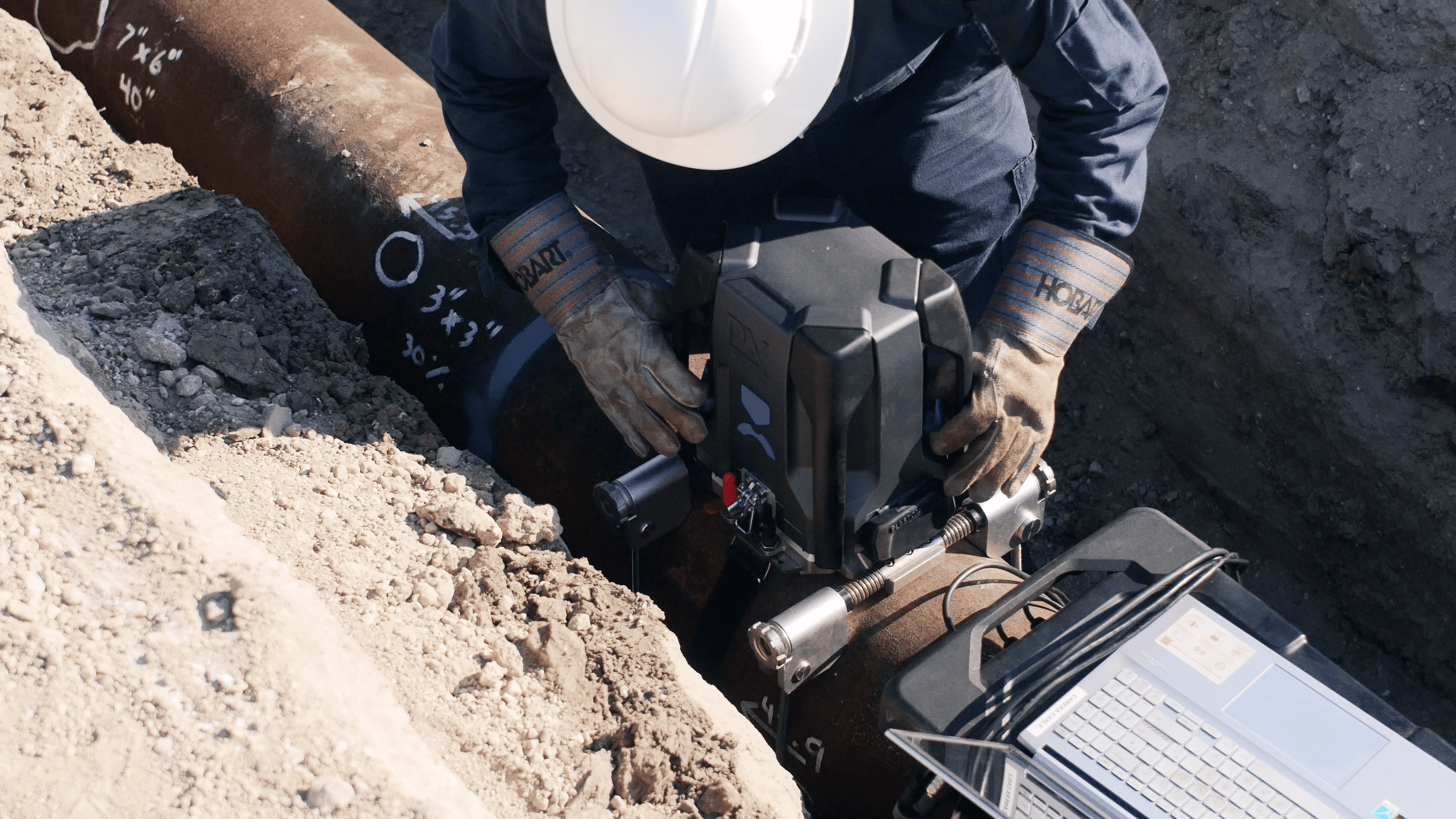
The approval of ASTM E3499-25 marks an important milestone for Plastometrex as well as the wider community that helped make it possible. Researchers, engineers, and customers have all contributed to the journey from early research to international recognition, helping turn a novel methodology into a standardised test method.
The journey to standardisation may have taken more than a decade, but its impact will be lasting. With ASTM E3499-25 now in place, PIP testing is positioned to become an even more trusted and routinely used part of mechanical testing practice, both in laboratories and in the field.
“I think what really excites me is that we’ve only started scratching at the surface so far. I genuinely believe that over the next few years we’re going to find so many different applications where we can deploy the technology and provide real value to customers.” – Dr Jimmy Campbell
Interested in learning more? Click here.
Frequently Asked Questions
What is ASTM E3499-25?
It is the ASTM standard for PIP Testing (Profilometry-based Indentation Plastometry), approved in October 2025 and published the following month. It establishes PIP as a recognised, trusted test method, providing a framework for adoption across industries where standards are essential, including aerospace, automotive, energy, and medical devices.
How long did the standardisation process take?
The research roots go back to the early 2000s at the University of Cambridge, with the formal ASTM process beginning in 2021. The standard took three years, eight separate ballot counts, and hundreds of comments before ASTM E3499-25 was approved in October 2025 and published the following month.
Who helped validate PIP testing for the standard?
Customer collaboration was central. An inter-laboratory study involved partners including NPL and Airbus, Nikon provided comparative results across additive manufacturing alloys showing agreement with tensile data within a few percent, and further inter-laboratory work with organisations such as RMS used identical samples to confirm results were consistent and repeatable across users and facilities.
How did PIP testing originate?
It grew out of indentation research in Professor Bill Clyne's group at Cambridge's Gordon Laboratory in the early 2000s. The term "indentation plastometry" was introduced in a 2019 paper by Clyne, Dr Jimmy Campbell, and Dr James Dean. Plastometrex was founded in 2019, and the first PIP system, the PLX-Benchtop, launched commercially in 2021.
What does the standard mean for in-field testing?
ASTM E3499-25 also supports in-field testing with the PLX-Portable, which is already measuring yield and tensile strength directly from operational assets across North America. It is now the only tool capable of obtaining in-situ mechanical property data backed by an ASTM standard.

Emma is the Marketing CommunicationsManager at Plastometrex. She joined in April 2023, bringing nearly a decade ofexperience across marketing, communications, and social media management. Inher current role she leads content strategy and production, alongsidephotography, videography, and graphic design. She holds a master’s degree incontemporary art history.